What Makes Travertine Stone Slabs A Popular Choice For Modern Interiors?
Choosing the right natural stone can make a significant difference to the appearance, durability, and overall value of an interior or exterior space. Homeowners, designers, and builders often look for materials that combine natural beauty with practical performance. Natural stone is a popular option because of its unique textures, earthy colours, and timeless appeal.
Travertine stone slabs are widely appreciated for their distinctive patterns, warm shades, and elegant natural finish. They can complement different architectural styles, from traditional homes to contemporary commercial spaces. Whether used for kitchen surfaces, bathroom designs, feature walls, or flooring, this natural material offers several possibilities for creating attractive spaces.
Understanding its features, benefits, applications, and maintenance requirements can help property owners decide whether this stone is suitable for their next renovation or construction project.
What Is Travertine Stone?
Travertine is a natural sedimentary limestone formed through the accumulation of calcium carbonate deposits, commonly around mineral springs and limestone caves. Over time, these deposits develop into a stone with distinctive natural patterns and textures.
One of its most recognisable features is its porous surface, which contains small holes and natural openings created during its formation. These characteristics give travertine its unique appearance and make each piece different.
It is available in several earthy shades, including:
- Beige
- Cream
- Ivory
- Light brown
- Walnut
- Silver-grey
These natural colours make it easier to incorporate the stone into different interior design themes.
Why Are Travertine Stone Slabs a Popular Choice?
Natural stone offers a combination of appearance and functionality that appeals to many property owners. Here are some reasons why this material remains a preferred option for residential and commercial projects.
Natural and Timeless Appearance
One of the biggest advantages of travertine is its natural beauty. Its soft colour variations, subtle veining, and distinctive surface patterns create an elegant appearance.
Unlike manufactured materials with repetitive designs, natural stone has individual characteristics. This helps create unique interiors that feel warm and visually interesting.
It works particularly well with wooden furniture, neutral colour palettes, natural lighting, and contemporary architectural elements.
Versatile Design Applications
Travertine can be incorporated into different areas of a property. Its natural appearance complements both classic and modern designs.
Depending on the finish, thickness, and installation requirements, it may be used for kitchen benchtops, bathroom vanities, wall cladding, flooring, fireplaces, and decorative features.
This versatility makes it a practical material to consider when creating a consistent design throughout a property.
Different Finishes for Different Styles
Natural stone is available in different finishes, allowing designers and homeowners to select an appearance that matches their requirements.
Common finishes include:
- Honed finish: Provides a smooth, matte surface with a subtle appearance.
- Polished finish: Creates a smoother, reflective surface that highlights the stone’s natural colours.
- Tumbled finish: Offers a weathered appearance with softer edges and a rustic character.
- Brushed finish: Creates a textured surface with a slightly aged appearance.
Each finish has different visual and practical characteristics, so the selection should depend on the intended application.
Suitable for Residential and Commercial Projects
Travertine can be used in various property types, including private homes, hotels, restaurants, offices, and retail spaces.
Its natural appearance can add character to reception areas, feature walls, bathrooms, and other architectural elements.
For commercial projects, it is important to consider the expected foot traffic, maintenance requirements, and suitability of the selected finish.
Long-Term Value With Proper Care
Natural stone can provide long-lasting performance when it is correctly selected, installed, and maintained.
Proper sealing helps reduce the penetration of moisture and staining substances. Regular cleaning and appropriate maintenance can also help preserve its appearance.
However, travertine is not maintenance-free. Its porous structure and sensitivity to acidic substances mean that suitable cleaning products and care practices are important.
Where Can You Use Travertine in Your Property?
Understanding the different applications can help homeowners and designers make better decisions.
Kitchen Benchtops and Splashbacks
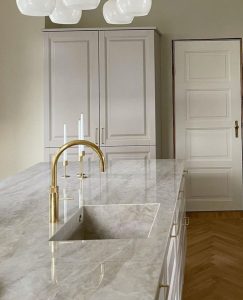
Travertine can introduce natural warmth and texture into kitchen spaces. It can be considered for benchtops, splashbacks, and decorative kitchen features.
However, kitchens involve regular food preparation, spills, and cleaning. Therefore, the stone should be appropriately sealed and maintained. Acidic substances such as lemon juice and vinegar should be cleaned promptly because they may damage calcium-based stone surfaces.
Bathroom Walls and Vanities
The soft colours and natural patterns of travertine can create a relaxing bathroom environment.
It may be used for vanity surfaces, feature walls, and selected flooring applications. Because bathrooms experience frequent moisture, correct sealing, waterproofing, drainage, and installation are particularly important.
Flooring and Living Areas
Travertine flooring can add a natural and sophisticated appearance to living rooms, hallways, and selected outdoor areas.
The finish should be chosen according to the location and expected use. For wet areas, slip resistance should be assessed carefully rather than relying only on the stone’s appearance.
Feature Walls and Decorative Areas
Natural stone can create an attractive focal point in residential and commercial interiors.
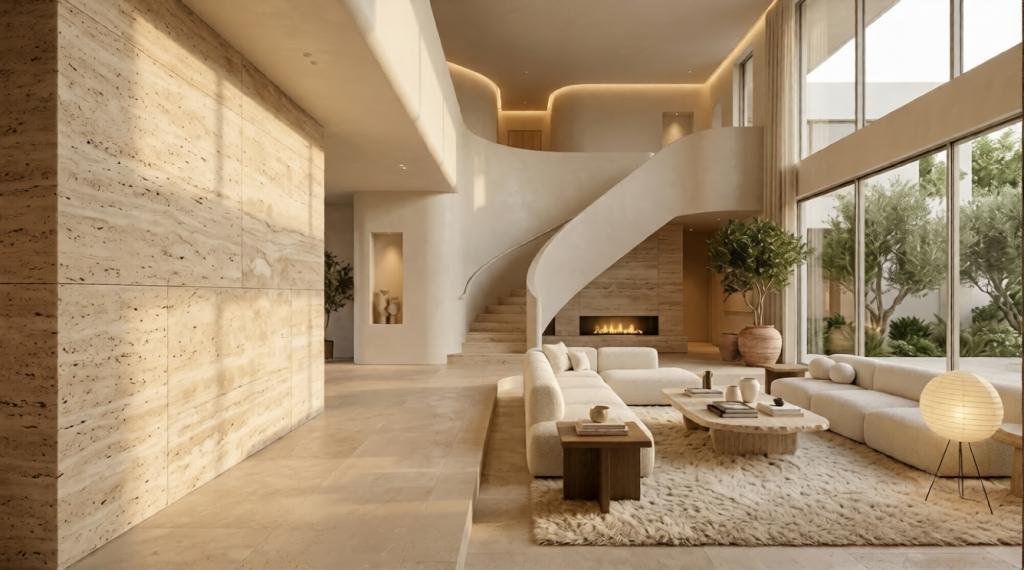
Travertine wall features can complement fireplaces, entrance areas, living rooms, and reception spaces. Its natural variations add depth and visual interest without requiring complicated decorative patterns.
How to Maintain Travertine Surfaces
Regular maintenance is essential for preserving the appearance of natural stone.
Follow these simple care practices:
- Clean surfaces using a pH-neutral stone cleaner.
- Avoid acidic cleaners, including vinegar and lemon-based products.
- Wipe spills promptly to reduce the risk of staining.
- Use soft cloths or non-abrasive cleaning materials.
- Apply a suitable stone sealer according to manufacturer recommendations.
- Avoid placing hot cookware directly on sensitive surfaces.
- Arrange professional maintenance when deep stains or surface damage occur.
Sealing frequency depends on the stone, finish, application, and product used. Following professional recommendations helps maintain the surface properly.
What Should You Consider Before Buying Natural Stone Slabs?
Before selecting a natural stone for a renovation or construction project, consider the following factors:
Check the Stone Quality
Inspect the material for natural variations, visible cracks, surface openings, and other characteristics. Since natural stone varies from piece to piece, viewing the actual slabs is helpful.
Select the Right Finish
Consider whether a honed, polished, brushed, or tumbled finish is suitable for the intended location. The finish can affect appearance, cleaning, and slip resistance.
Understand Installation Requirements
Natural stone installation requires appropriate preparation, handling, adhesives, and sealing. Working with experienced stone installers helps achieve a suitable finish.
Compare Costs and Maintenance
The overall project cost may include material selection, cutting, transportation, installation, sealing, and ongoing maintenance. Comparing these factors helps create a realistic renovation budget.
Frequently Asked Questions
Is travertine suitable for kitchen benchtops?
Yes, it can be used for kitchen benchtops when properly selected, sealed, and maintained. However, it is porous and sensitive to acidic substances, so regular care is necessary.
Is travertine a durable natural stone?
Travertine can provide good durability when installed correctly and maintained properly. Its performance depends on the stone quality, finish, application, and level of use.
Does travertine require sealing?
Yes, sealing is generally recommended because its porous structure can absorb liquids and become stained. The correct sealing product and maintenance schedule depend on the application.
Can travertine be used in bathrooms?
Yes, it can be used for bathroom walls, vanities, and suitable flooring applications. Proper sealing, waterproofing, drainage, and slip-resistance considerations are essential.
What colours are available in travertine?
Common colours include beige, ivory, cream, walnut, brown, and silver-grey. Natural colour variations make each slab visually distinctive.
Conclusion
Natural stone is an excellent option for adding warmth, character, and visual appeal to residential and commercial spaces. Its distinctive patterns, earthy colours, and versatile applications make it suitable for various interior design projects.
Travertine stone slabs can be considered for kitchen surfaces, bathroom features, flooring, wall cladding, and decorative applications. Before making a selection, evaluate the stone quality, finish, installation requirements, and maintenance needs. With appropriate planning, professional installation, and regular care, this natural material can remain an attractive feature of a property for many years.